As in many other fields, AI is transforming digital marketing and advertising at a pace we haven't seen before. This time the latest development comes from Amazon and the Alexa+ Agentic ads the platform just announced.
The company showed a future where advertising won't just need to win the customer's attention - it will also complete the entire sale, without the person ever leaving their conversation with the AI assistant.
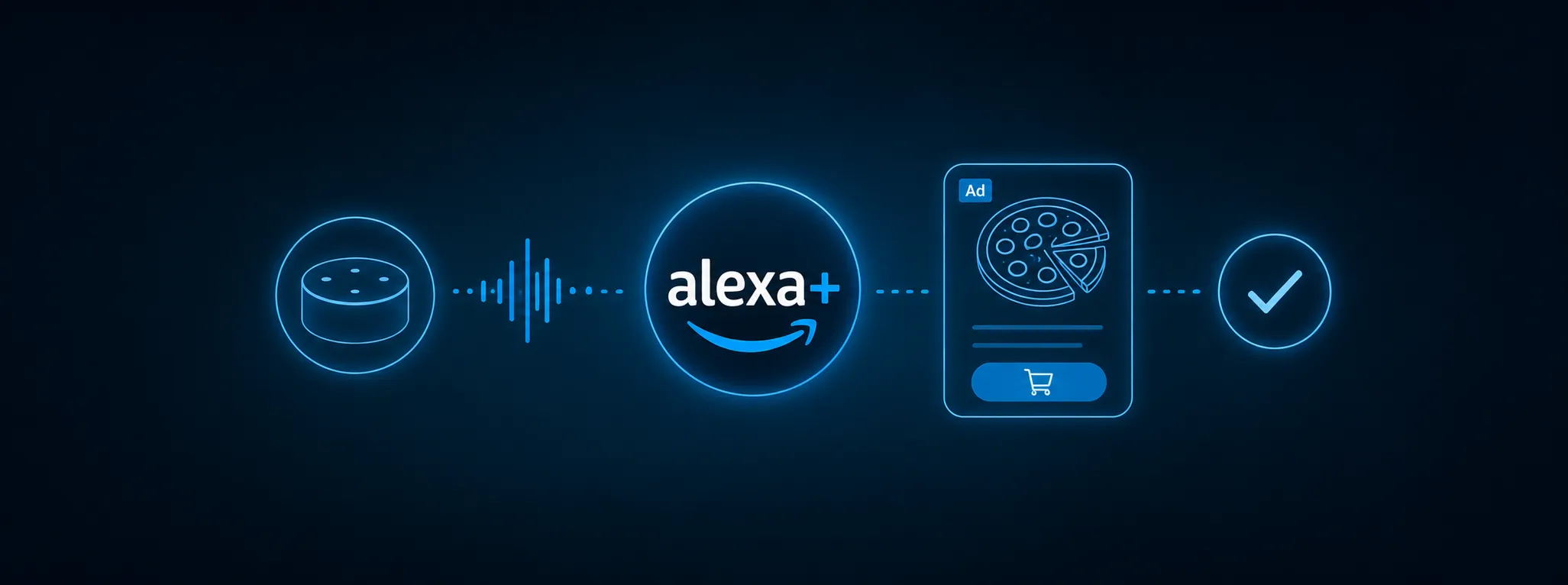
On June 23, 2026 (Prime Day), Amazon announced Alexa+ Agentic Ads - a new ad format that lets users see an ad, ask questions, compare options, and complete a purchase entirely through a conversation with Alexa+, without a single click outside the device itself.
Not particularly well known in the Bulgarian market, Alexa+ is Amazon's new generation voice assistant, built on generative artificial intelligence (AI). Unlike the classic Alexa, which mainly executes commands and answers simple questions, Alexa+ holds natural conversations, remembers context from previous interactions, and can carry out more complex tasks on the user's behalf - from bookings and shopping to organizing their day-to-day life. The service is available mainly in the US, most commonly through Amazon Echo devices, and has not yet officially launched in Bulgaria or most European markets. That's exactly why the topic rarely comes up in the local digital space - but the trends it sets are relevant to brands everywhere, including in Bulgaria.
And even though we don't use Alexa in Bulgaria, we believe this is more than news about a new product from a big platform. It's a signal for the direction and the trends that will shape customer experience going forward, especially in cases where the customer may not actually be a human.
Alexa+ Agentic Ads: What Amazon Exactly Announced
Alexa+ Agentic Ads is the first ad format that takes a customer from an ad to a completed purchase entirely within the conversation. The format is launching in test mode with several partners, including Papa Johns for food ordering and artists Beck, Jill Scott, and Omar Courtz for concert ticket sales. Amazon naturally plans to open the format to more advertisers across categories very soon.
How Alexa+ Agentic Ads Work
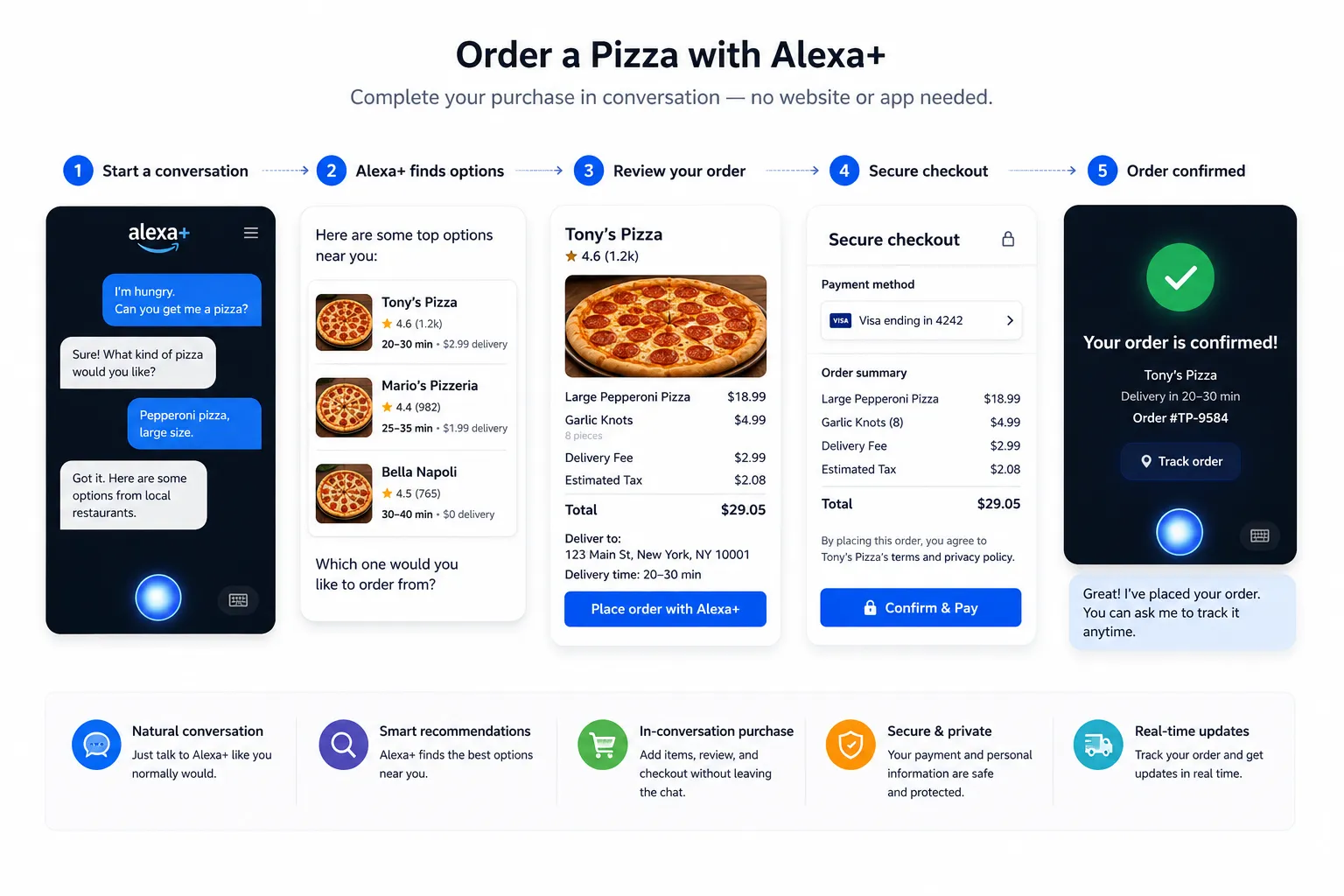
Unlike traditional digital ads that redirect the user to a website or an app, Alexa+ Agentic Ads keep the entire experience inside the conversation. The user can ask questions, compare options, check availability, and complete the transaction through a natural conversation with Alexa - without ever going through a product page or a checkout page.
For concert tickets, fans can see an ad for an upcoming show, ask Alexa for details, check available seats, compare prices, and book - then receive their tickets in their account, all within a single conversation with the app. For food ordering, the logic is similar: the customer sees a Papa Johns ad, and since Alexa already knows the user's taste, it can recommend their favorite items, extras, and drinks directly, then complete and pay for the order within that same conversation.
This is exactly the main difference between designing customer experience for people (where most decisions are subjective) and for various AI agents, which will make more straightforward, linear decisions.
According to the team behind Alexa, customers are already using the app to discover new products and make decisions, and the format significantly shortens the gap between purchase intent and actual action (from the AIDA funnel) - increasingly within a single conversation.
Comment from marketing agency DGTalents: Alexa+ Agentic Ads are part of a broader trend that affects every market, regardless of whether Amazon is present there or not. AI agents will increasingly take actions on the user's behalf, recommend products, and look for objective comparisons between alternatives.
As a reminder of where things stand on the advertiser side, here's just one example: You can already manage ad campaigns through AI assistants like Claude and ChatGPT
Why Customer Experience Design Needs to Change
Alexa+ Ads are simply an occasion to raise the topic of agentic advertising and a more interesting question for every online business and marketing team: What happens to customer experience design when a conversation is no longer driven solely by a human, but by an AI agent acting on the user's behalf?
The Conversation Replaces the AIDA Funnel
The classic marketing funnel (from awareness, through interest, to decision and purchase) has always assumed several separate steps, a mix of channels and formats, and strategic planning of the experience: ad, creative, landing page, cart, checkout. With Alexa+ Agentic Ads, all of these steps merge into one continuous interaction. Design is no longer a sequence of steps across different platforms over time, but the logic of a dialogue - questions and answers that need to address every possible hesitation and objection the customer might have, right up to the moment of payment and order completion.
Your Product Information Needs to Be Ready for Traditional, Voice, and AI Search
When a buyer isn't browsing your catalog but relying on AI to describe and summarize product information through a voice reply or a short text answer, your content needs to be structured in a way that lets assistants extract, summarize, and present it easily and accurately. All of this ties directly into AI tool optimization (GEO/AEO), a topic we keep coming back to. In our agency's projects, we work to make sure product and service information is clear, specific, and well structured, so AI models can understand it easily and pass it on to the end customer correctly.
Trust Shifts from the Brand to the Assistant
With traditional advertising, the user judges the brand directly - by visuals, tone, reviews, recommendations, and so on. With agentic ads, the user trusts the AI assistant first and foremost to make the right choice for them. That means brands need to invest in reputation and data that show up in AI tool responses - reviews, structured data, consistent presence across the digital space - and not just in ad formats alone.
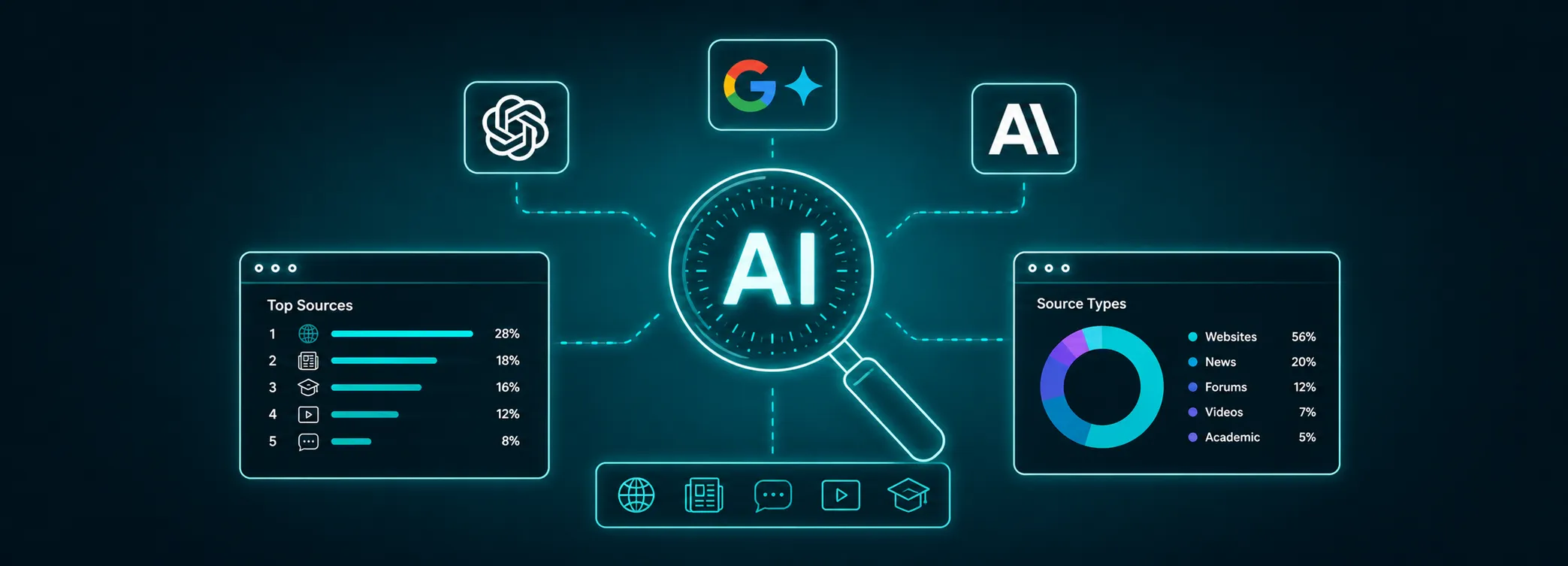
Current data: What ChatGPT, Gemini, and Claude Read to Answer User Questions
Personalization Is Now a Requirement, Not Just a Good Practice for Successful Advertising
The Papa Johns example makes this clear: Alexa+ suggests the customer's favorite order because it has a history of previous conversations. It also knows whether the user is likely to take advantage of a promotion, or when their favorite drink comes as a free add-on to the order.
Brands that don't have structured data on their customers (CRM, order history, preferences) will fall noticeably behind those that can feed AI assistants accurate information about each individual user.
Some Impulses and Micro-Moments in the Decision-Making Process Disappear
In traditional customer experience design, we usually build in various impulses meant to motivate a person to complete a purchase or order more (customer reviews, ratings, cross-sells, countdown timers, limited-time offers, personalized deals, and so on). We do this because we know that, at that very moment, the customer is probably comparing several offers, has competitor pages open as well, and is about to make their choice.
When everything happens inside a conversation with an AI assistant, however, we lose the ability to trigger these impulses visually (on our site, through a pop-up banner, a product label, and so on), and we'll have to rely on the assistant to evaluate that information for us within its response to the person.
And this shift doesn't affect only major players like Amazon. Any business investing in Google Ads, Meta Ads, or SEO content now also needs to think about how its product information will sound and come across once it's processed by an AI assistant, not just seen by a person on a screen.
Comment and Recommendations From Marketing Agency DGTalents
We work daily with brands across different industries (tech companies, online stores in various categories, real estate, professional services), and what all of them have in common right now is a genuine interest in more visibility and trust within AI platforms. Here's what we advise all of them:
- Review your product content and offers with AI readability and visibility principles in mind. Product and service descriptions need to include clear data (price, availability, features), structured in a way an AI assistant can easily extract and pass on correctly, whether the customer is asking ChatGPT, Gemini, or another voice assistant.
- Invest in GEO/AEO/SEO and any activity that improves your visibility and discoverability in search engines (standard search engines, AI tools, AI search engines).
- Build a foundation of structured, consistent customer data. The Papa Johns example is only possible if you know your customers and have historical data on their behavior. Even as a small business without existing data, you can invest in email marketing and automation to start building that foundation.
- Don't underestimate your reputation on external channels. What others say about you carries far more weight than what you say about yourself. Customer reviews, business ratings, and presence across different channels are exactly what AI tools rely on much more heavily when evaluating a given brand.
- Keep track of new features and ad formats appearing on the platforms you use. Google Ads, Meta Ads, and the other major ad channels available in the Bulgarian market keep introducing new formats, settings, and campaign types shaped by industry momentum. A few examples include:
It's important for your business to adapt its strategy in time and successfully test the features and formats that make sense for you, before the platforms become saturated with advertisers.
If you're managing Google Ads, Meta Ads, or building an overall marketing strategy for your brand, take a look at our marketing services and our approach to digital advertising, focused on results and adaptability to new AI formats.
Frequently Asked Questions
What are Alexa+ Agentic Ads?
Alexa+ Agentic Ads is an Amazon ad format that lets users complete a purchase entirely within a conversation with the Alexa+ voice assistant, without leaving the conversation or opening a separate website or app.
Which partners is the format launching with?
The format is launching with Papa Johns for food ordering, as well as with artists Beck, Jill Scott, and Omar Courtz for concert ticket sales through Ticketmaster.
On which devices does Alexa+ Agentic Ads work?
At the moment, the experience is available on Amazon Echo Show devices.
How does agentic advertising differ from traditional digital advertising?
Traditional digital advertising redirects the user to a website or app to complete a purchase. With agentic advertising, the entire process - from questions, through comparing options, to payment - happens inside the conversation with the AI assistant.
What does this trend mean for small and medium businesses in Bulgaria?
It means a need for structured, clear, and easily AI-extractable content about products and services, investment in GEO/AEO optimization, and building a reputation that AI assistants can "read" and present accurately to potential customers.
How does DGTalents help brands prepare for AI-driven advertising?
At DGTalents, we combine a classic strategy for Google Ads, Meta Ads, and SEO with optimization for AI visibility, to make sure brands stay visible and profitable, regardless of whether the customer is searching through a browser, a chat, or a voice assistant.